Monday, November 08, 2004

A note regarding the recent lack of activity:

  • Trent and I are each feeling a little under the weather

  • Site maintenance issues continue to take up a lot of time and effort

  • It's early November


Our most pressing issue is one which, once resolved, should leave everyone feeling pretty pleased. In the meantime, if you're starved for warm and fuzzy news, Ryan Anderson claims to be nearing a comeback. The 6'11 southpaw who hasn't thrown a competitive pitch since 2000 remains positive and upbeat about his chances at a big league career, looking to break camp with a team and resume his ascent to the Majors.

Anderson, as you surely remember, was once a strikeout machine who posted unacceptable walk rates over three Minor League seasons. When healthy, the Little Unit had three big flaws:

  • Struggled against lefties

  • Poor control

  • Lousy work ethic


Now, more than four years removed from his first major injury, Anderson has answered the questions about his attitude and ethic but simultaneously introduced a new concern: health. He's had three significant surgeries since 2000, getting work on a torn rotator cuff and similarly damaged labrum. At this point, it seems extremely unlikely that Anderson ever completes another professional season before he calls it quits.

Understand that by no means am I rooting against the guy; he's displayed tremendous perseverance, and - much like Justin Thompson - makes for a heartwarming "against all odds" story, should he ever achieve his goals. However, we've heard all this stuff before. Just last March, Anderson deemed 2004 to be his last chance. Around the same point in time, Bryan Price remarked that Anderson "looked very good...the best I've ever seen him." In the previous March, Anderson established that his goal for 2003 was to "just be able to play." You see the same kind of stuff every year - people talking about the kid's resilience, and Anderson being quoted as saying something like "I'll play anywhere, I just want to pitch."

Don't buy into the hype. Let him throw an inning first.

In other news, Jim Street is the latest media figure to call Jason Varitek the "heart and soul" of the Red Sox.

He also states that "there is no reason to think Boone and Spiezio won't bounce back from poor seasons in 2004."

If you don't read Mariner Mailbag, you're not missing much.

Saturday, November 06, 2004

With Jeff being out of town, I had hoped to take a much needed day off from school and work to have a lazy day and work on some new material for the site. But of course, it’s never that easy. I spent the majority of the day in bed, sick as a dog. I had hoped to have completed a write-up on what direction I believe the M’s should take this off-season, but it will have to wait another until another day, possibly tomorrow.

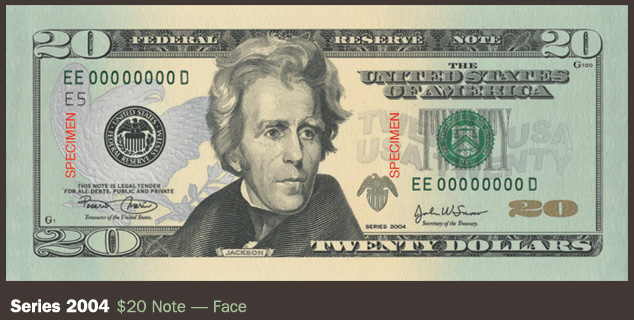
This evening I was perusing the internet for any new baseball related information and I stumbled across the new piece by the only baseball analyst on American currency, Peter Gammons. Apparently, he has been told, or is under the impression that Richie Sexson will be a Mariner next season. Now while I wouldn’t be the least bit upset if Richie Sexson was a Mariner next season, he shouldn’t be our top target and isn’t the big bat that will take us over the top.

To continue the first baseman theme, the M’s have talked to Carlos Delgado’s agent about the possibility of him joininhg the Mariners. I have some serious concerns with the Mariners going after Delgado, but similar to Sexson, I wouldn’t be that upset if he were to join the club next season. My concerns surrounding Delgado focus primarily on health issues and age, but paying Delgado for three years to exploit the short right field fence has its benefits.

For those who emailed me about the site changes, you’d have to direct those questions to Jeff he is the one who made posted the post regarding the changes. Although, I have to say I’m surprised that no one noticed that he did alphabetize the Other Baseball Blogs links. I will say that I expect everyone will be pleasantly surprised, but alas, I’ve said too much.


Update: Dave and DMZ talked about the same Gammons article suggesting that Sexson is bound for the Emerald City. While I don't necessarily agree with giving Glaus and Delgado big deals to play here for three years, it is a good fall back plan should the team fail to sign Beltre or Beltran.

Friday, November 05, 2004

The circus sideshow that is also commonly referred to as the DBacks managerial search is finally over. Again. Wally Backman was fired this morning, lasting just four days with the club, (Billy Martin who?) and Bob Melvin was immediately named his successor. Apparently with Melvin's hiring, the M's are only responsible for the difference in salary between what the M's were supposed to pay him next year and how much Arizona is paying him in 2005. I think I speak for all of us here at Leone for Third when I wish Bob Melvin good luck with his new ballclub. Oh, and please take Willie Bloomquist with you.
Steve Nelson at The Wheelhouse posted a link to a St. Paul Pioneer Press piece which mentions Seattle as one of the teams showing "strong interest" in Brad Radke. It also states that Radke is looking for a two-year deal worth something in the neighborhood of $17m.

(The same article also mentions that Jacque Jones could be making as much as $6m in 2005, which - along with the Radke situation and Boras' demand that Beltran get ten years - makes you wonder if the whole market adjustment thing was only temporary.)

Now, Dave profiled Radke a few weeks ago at USS Mariner, pointing out that pitchers with his skillset are prone to inconsistency, and that Radke hit his 90th percentile PECOTA projection - a performance that should happen once every ten times. Dave also mentions something else that needs to be quoted:

Coming off one of the best seasons of his career, it is not likely that he’s going to be amenable to taking any significant pay cut. Radke’s success, name recognition, and previous high salary are going to make him an expensive option for whichever team decides to sign him this offseason. You will essentially be paying full price for a pitcher who has almost no chance to improve. The likelyhood of getting more value out of Radke than you pay for is next to nil. In the words of the immortal Hubie Brown, Radke lacks “upside".

In the league context, Brad Radke had the best year of his career in 2004, putting up an ERA+ of 136 (ERA 36% better than the league average). This came on the heels of two eminently garden-variety seasons which suggested a career decline. It would have been a little earlier than expected - Radke was not yet 30 years old when he finished his rough 2002 campaign, in which he missed significant time due to a strained groin (his worse numbers don't appear to be due to the injury, as he was less than stellar prior to getting hurt). Still, there was -and continues to be - reason for concern.

As we've seen from Jamie Moyer, pitchers who depend on command and deception can have quite extended success, and it's not out of the question that Radke could build on his 2004 success and put together a streak of several consecutive solid seasons. However, the difference between Radke and Moyer is that the latter has been pitching in front of historically good defenses (as suggested by his BABIP's) in an extreme pitcher's park, whereas the former has spent his years in front of a worse (but still good) defense in a slight hitter's environment. Radke's always been better at home than on the road, though; as a slight flyball pitcher, he isn't as likely to get burned by grounders on the fast turf than a more groundball-oriented pitcher.

The best current comparison for Radke, it seems, is David Wells, another extreme command pitcher with marginal strikeout rates (with the obvious difference being that Wells is a southpaw). Since turning 32, Wells has put up a wide range of ERAs, from 3.49 to 5.14 - his cumulative ERA over the same time span is 4.21.

A cursory glance at the player pages leads me to believe that Radke is due for a similar performance stretch: some good seasons mixed in with some below-average ones that, when taken as a whole, indicate a decent, but not exceptional pitcher. Radke's ERA would, of course, be helped out by Safeco, but a mark in the high-3's or low-4's is hardly worth his asking price.

$8.5m a year would be enough to land Matt Clement, a younger pitcher with more strikeout ability and a better track record of recent success than Radke. This is one of those situations where the Mariners should sit back and let someone else sign the name, so that they can swoop in and get the better deal instead.

With that, I'm done for the weekend (again). I won't be doing this too much more, I promise.

Thursday, November 04, 2004

I was stumbling through some of the Baseball Prospectus stat pages when I came across something that piqued my interest:

Last year, the Mariners scored 45 fewer runs than their estimated total.

I ran through a little research that, as it turns out, didn't support my initial hypothesis. In the end, the reason for the offensive underachievement was pretty simple: the Mariners didn't deliver as often as you'd expect when there were runners to drive in.

The following are Seattle's batting numbers in certain situations:

None On: .274/.332/.406

Runners On: .264/.330/.385

Runners In Scoring Position: .263/.343/.369

A typical offense will improve its numbers by a small percentage (in the neighborhood of +3-4%) when there are runners on the bases. For the sake of comparison, look at the numbers put up against Mariners pitchers last year in the same situations:

None On: .260/.329/.435

Runners On: .272/.343/.449

Runners In Scoring Position: .266/.348/.440

Now let's look at the differences side-by-side, with the percentages representing change from the numbers with no one on base:

Mariners, Runners On: -3.6%/-0.6%/-5.2%

Opponents, Runners On:+4.6%/+4.3%/+3.2%

Mariners, RISP: -4.0%/+3.3%/-9.1%

Opponents, RISP: +2.3%/+5.8%/+1.1%

When there were men on base to drive in, Seattle's offense was worse than you'd expect, whereas Seattle's opponents obeyed the expected trend of slight improvement in performance over that with none on.

What does this tell us about the future? Essentially nothing - over a long enough timeline, offenses will perform at an incrementally higher level with men on base or in scoring position. The Mariners weren't cursed with an inability to drive in runs; they were just unlucky, which made a bad situation worse.

Of course, there are a few other reasons why the team may have underperformed its expected run total; the one I tried to identify was speed, or lack thereof. I hypothesized that slower teams would underperform the expectations, whereas fast teams would score more runs than you'd think.

As it turns out, there is no significant correlation between team speed and meeting run expectations, but I did learn about an unfamiliar statistic in the process. Speed Score, in BP's words, is:
one of five primary production metrics used by PECOTA in identifying a hitter's comparables. It is based in principle on the Bill James speed score and includes five components: Stolen base percentage, stolen base attempts as a percentage of times on first base, triples, double plays grounded into, and runs scored as a percentage of times on base.


The formulae for calculating speed score are included right there in the link.

The league-average speed score in 2004 was 5.27. For some perspective, Ichiro's was 6.67, whereas Edgar Martinez was at 2.07 - a good candidate for lowest score in the game, although I don't have access to everybody's data in the Majors.

The Mariners as a team had a speed score of 5.22, good for 16th in baseball. We may thus infer that, for all intents and purposes, Seattle - as a team - had league-average speed last year. Some giddyup under the feet of Ichiro, Winn, Bloomquist, Cabrera, and some other role players cancelled out the slowing effect of having Edgar, Olerud, Wilson, Ibanez, and others collecting a bunch of at bats over the course of the year.

For the curious, Tampa Bay was the most fleet-footed team in baseball last year (6.17), while Arizona finished in - where else? - last place (4.48).

In the end, not much relevant data came of the research tonight. Still, speed score is useful in that it may potentially lend some insight into why some teams may be scoring more or fewer runs than you'd expect, given their overall numbers. For a guy who loves numbers more than most anything else on the planet, this is right up my alley.
Another reason why the M's should focus their their attention towards Adrian Beltre and avoid what promises to be a circus.
Ichiro won another award today; this time, it was the AL Outstanding Player of the Year, as voted on by his peers.
Thanks to Dave at USS Mariner for pointing out Jim Callis' free agent ranking in today's Ask BA (scroll to the bottom).

The players are sorted into three groups: Types A, B, and C. As you may or may not know, the compensation for signing a Type A free agent is your first-round pick, plus a supplemental first-rounder. For a Type B, it is the first-round pick only. For Type C, the compensation is a supplemental second-rounder.

When applicable, teams whose first pick is in the upper half of the round (that is, picks #1-15) forfeit their second-rounder instead.

This is a preliminary list, as some of the players have yet to file for free agency.

Wednesday, November 03, 2004

The Mariners made a few additions to the front office today; Dan Evans and John Boles were hired as scouts.

You may remember John Boles as Florida's manager from 1999 into 2001. He has since been working as an adviser with Los Angeles. Evans, of course, spent two years as the Dodgers' GM and another as a front office executive after working with the White Sox for nearly two decades. He spent 2004 as a part-time adviser with the Mariners.
As a heads-up, the site will be undergoing some necessary maintenace work today (and possibly over the next few days), so it may be unavailable or rendered differently from time to time. Bear with us; this is a process intended to improve the quality of the website.

Tuesday, November 02, 2004

The fact that Eddie exercised his option so quickly scares me, as it might be an indicator that he knows/believes that his shoulder isn't fully healthy. Last season, Eddie was the most effective reliever on the club April-June, (despite his propensity to blow saves) and struggled in July, which is probably a direct result of his shoulder injury.

I have serious doubts about how effective Guardado will be this season. In fact, I don't believe Guardado will ever return to the pitcher he was for the past three years or so. Torn rotator cuffs are serious injuries that should not be taken lightly, especially for pitchers. Guardado received two different opinions from team doctors and Dr. Yocum, with team officials prescribing surgery and Yocum prescribing rest. Obviously, I hope that Guardado will be an effective member of our bullpen next year, but until I see him take the mound in spring training and see some results, I'm going to remain skeptical.
Guardado picked up his 2005 option today, guaranteeing that he will collect $4.5m next season whether he pitches effectively or not.
For whatever reason, I neglected to mention that Boone and Ichiro won Gold Gloves as well.

As if you needed more evidence that reputation is everything with these kinds of awards.
In other news, Derek Jeter won his first Gold Glove this afternoon.

In reality, he was considerably better in 2004 than in previous seasons, but he was far from the best in the AL. It's been hypothesized that his defensive numbers look better because the nimble-footed Alex Rodriguez covered a lot of Jeter's territory from third base.

I would've put Jeter fifth, behind Miguel Tejada, Cristian Guzman, Carlos Guillen, and Jose Valentin, myself (with #'s 2-4 in no particular order).

Of course, this award is virtually meaningless - look no further than 1999, when Rafael Palmeiro won the AL Gold Glove award at first base despite playing just 28 games in the field.
Jamie Moyer won the 2004 Branch Rickey Award today for his "unselfish work in the community."

He will be inducted into the Baseball Humanitarians Hall of Fame on Friday.

Monday, November 01, 2004

The finale of a three-part series looking forward to the offseason

Winter 2004: A Reasonable Perspective

After finishing with the team's worst record since 1983, you'd be hard-pressed to find anyone affiliated with the Mariners organization who has something positive to say about the season. The rotation was inconsistent, the offense struggled to score runs, and the bullpen - a strength in seasons past - was torn apart by injuries and inexperience. They managed to avoid the dreaded 100-loss plateau by the slimmest of margins, forcing one manager out the door immediately following the season and bringing in another with experience under similar circumstances. This is as good a place to start as any.

The Offense

The Mariners finished 19th in OBP and 15th in EqA - nothing to write home about, but winding up in the middle of the pack in terms of offensive productivity is better than many would lead you to believe. However, an average offense won't win you too many games without an exceptional pitching staff, so it will be absolutely critical for some of the holdovers to improve upon their 2004 seasons if this team hopes to compete in the near future.

So, what are the chances of this happening? Might as well start from the top and work our way down. Ichiro had an amazing season, setting the all-time hits record and hitting for the highest AL batting average in 24 years. That said, singles rates are difficult to keep consistent on a year-to-year basis, and some work has already been done to show that Ichiro may have been quite lucky last year. It seems pretty likely that he regresses some in 2005, as Ichiro will find it slightly more difficult to turn balls in play into hits. Not that there's anything wrong with a .301 EqA from your starting right fielder (his career mark) - which would have been eighth in baseball last season - but this is a team that will find it difficult to make up for Ichiro's lost production.

Raul Ibanez and, to a lesser extent, Randy Winn surprised observers by having solid 2004 campaigns. The former staved off age-related decline as he put up the best year of his career, while the latter repeated his decent 2003 season despite moving up the defensive spectrum. Indeed, PECOTA underestimated each player, and they helped keep our offense away from the league's cellar. This should not be construed as a suggestion that Ibanez and Winn will continue to produce at a similar level in 2005, though. They're both over 30 years old, and the same age-related issues from last winter apply once more this time around. While projection systems will take the 2004 season into account and adjust accordingly, both Ibanez and Winn will be pegged for declines next year, and - however minor such declines may be - neither stands a very good chance of making up for Ichiro's probable regression.

Bret Boone looks to be the key to the offense's hopes for resurrection in 2005. A guy who had put up a .307 EqA over the previous three seasons, Boone fell to .265, a level of performance much closer to his pre-Seattle career than his more recent years. His batting average was the lowest it's been since 1997, his walk rate declined while his strikeouts increased, and his .172 isolated power was down 24% from where it had been in his previous three seasons in Seattle. Boone hopes that offseason laser eye surgery will eliminate a mysterious vision problem that he claims plagued him all year long, but we heard the same story about Aurilia, and we all know how that one turned out. You'd like to think that Boone will rebound to capture some of his long-lost magic, but there is a precedent for second basemen around his age hitting the wall, and it seems unlikely that he ever again approaches the kind of offensive numbers we expected of him in 2004. Consider his 2003 season - .278/.339/.462 - as an upper bound, with his career .268/.327/.447 line being a more probable result.

There isn't very much hope for the veterans to experience an offensive resurgence next year, but some of the lost production should be made up for with improvement by younger players, along with more playing time for others. Seattle's catchers had the worst group performance in baseball last year, putting up a .586 OPS that should be eclipsed by Olivo/Wilson with little or no effort. A full season of AB's for Jacobsen and Leone would represent positional improvements over the 2004 versions (and if they don't get 600 at bats apiece, it will be because better players were brought in). If Jose Lopez finds himself as the starting shortstop next April, he'll be hard-pressed to put up a worse year than Rich Aurilia. Even Jeremy Reed could contribute some offense off the bench, although he probably wouldn't hit as well as Winn or Ibanez did last year if given the chance.

The Mariners' offensive core consists of aging veterans surrounded by solid bench bats/role players and a few guys who'll be good a few years down the road. An easy-to-assemble bench of Jacobsen/Leone/Cabrera/Reed/Wilson (please don't make me talk about Spiezio) would already be worth several more runs than last year's version, but the team doesn't have anyone who's going to make up for Ichiro's lost production. For this reason, it is vital for the front office to bring in a few strong bats, because the offense is going to get worse without them.

The Defense

Let's take a quick glance at the roster turnover by position:

  • Catcher: Wilson/Olivo (unchanged)

  • First Base: Olerud/Spiezio/Jacobsen --> Probable Free Agent

  • Second Base: Boone (unchanged)

  • Shortstop: Aurilia/Lopez --> Free Agent or Lopez

  • Third Base: Spiezio/Leone/Cabrera/Bloomquist --> Probable Free Agent

  • Left Field: Ibanez (unchanged)

  • Center Field: Winn (unchanged)

  • Right Field: Ichiro (unchanged)

Looking up and down the list, you realize that this is a group that probably isn't going to improve upon last year's performance. The Mariners were second in the AL in Defensive Efficiency in 2004, though, so a moderate downgrade would still leave the team in pretty good shape with the glove. The entire outfield (barring a Winn trade) is a year older, and it was considerably worse than it was the year before, but none of the three players is going to lose a step over the winter, so the group should remain profoundly average. The infield will be the problem area. More Olivo means more passed balls from behind the plate. Losing Olerud and replacing him internally (Jacobsen) or externally (Delgado) will result in a net loss with the glove. Boone is a year older, and looked much worse last year than we're accustomed to seeing him. Aurilia was a statue, but Lopez didn't look too good himself, and even Omar Vizquel (who looks like a strong possibility for 2005) has regressed to the point of being slightly below average in the field, according to Clay Davenport's translations. Third Base was a mess, but Spiezio was every bit as good in the field as Adrian Beltre, who could be in Seattle for 2005. Certainly none of the internal candidates for third base are as solid with the glove as Spiezio.

The team won't be hit very hard by the defensive downgrade, as the pitching staff is mostly flyball-oriented, but you'll see more balls drop in for hits than you did last season, which isn't something you want from a team who can't afford to concede any more runs than necessary.

The Pitching

Due to its topical nature, I might as well start with Guardado, who will either stick around for $4.5m next year or join the free agent market. My opinion on the matter is pretty simple: you should never build a team from the back, especially when you're talking about a 34 year old pitcher with arm problems on a team that probably isn't going to compete. Furthermore, Guardado is trying to fix a torn rotator cuff with a little R&R, rather than the recommended surgical procedure, which puts a damper on his chances of returning strong in 2005. If he returns with the Mariners, he probably isn't going to be as effective as he's been over the past four or five years; if he goes to the market, then that's another $4.5m to spend on more important players.

Since I began with Guardado, I might as well get the bullpen out of the way before I move on to the rotation (I know, I know, how counterintuitive). 2004 presented a whole host of young players with the opportunity to establish themselves as ML-caliber pitchers, and a few took advantage of the chance. Scott Atchison, JJ Putz, George Sherrill, and Matt Thornton were all effective (to varying degrees) in more than 130 combined innings of playing time, and committing to them for next season would provide the team with more financial flexibility, as they'd be spending just $1.2m on four relievers. Although none were flawless, they each displayed abilities - Putz succeeding in the closer role, Sherrill getting lefties out, Atchison getting a bunch of strikeouts, and Thornton bridging the gap between the rotation and the late-inning relievers - that every front office considers to be important. All four would have their ups and downs over a full season of work, but relying on cheap, inconsistent relief is better than relying on expensive, inconsistent relief, which brings me to...

...Shigetoshi Hasegawa, who earned more than twice as much in 2004 as those four aforementioned pitchers would make next season combined. Hasegawa isn't a *bad* pitcher, but his walk rate was a career high, and he serves as a perfect example of why giving multiyear contracts to relief pitchers is rarely a good idea. He won't put up an ERA above 5.00 again, but he's not the type to depend on in high-leverage situations, and isn't any better than a whole host of internal options for the bullpen.

Other guys you'll probably see in the bullpen are Ron Villone and Julio Mateo. Villone is a free agent who looks to be a good bet to re-sign with the club, a move that won't cripple the organization in isolation, but which implies a lack of confidence in younger, cheaper options such as Thornton (who is quite similar to Villone, in fact). Villone put up a shiny ERA in relief, and got a bunch of lefties out, but his performance was out of whack with his track record, and he'll find himself sopping up middle innings by the end of the year, if he lasts that long. Mateo, on the other hand, pitched better than his ERA would indicate, but he was bit by the same home run problem that came up from time to time in 2003, along with an increased walk rate. His 2003 performance was closer to his Minor League track record than his 2004 season, so expect him to split the difference going forward, and becoming an underrated cog in the bullpen.

Which brings us to the starting rotation, which will have to dramatically improve upon last year's 4.88 ERA if they want to have even slip hopes of competing. We start with Joel Pineiro, who looked like he'd need TJ surgery until further tests ruled it out (although the same thing happened with Soriano, and we know what became of that). Pineiro's health will be critical in determining the success of the pitching staff, as his absence shifts each starter into a difficult situation while putting a lot of strain on the bullpen. When healthy, Pineiro throws strikes and keeps the ball in the park; he won't blow hitters away, but he doesn't get hit very hard, and quietly eats up 200 innings from the front of the rotation. While he's overmatched as the #1 pitcher in the rotation, he remains the best arm the organization has to offer right now, and should put up an ERA around 3.70 if he's healthy enough to start in 2005. Cross your fingers and hope that the organization takes it easy on him at the start of the year.

Bobby Madritsch was the biggest surprise (biggest *good* surprise, anyway) of the year, logging 88 second-half innings while posting a 3.27 ERA. Going forward, there are reasons to be concerned about his long-term success: he benefited from some good defense last year, while posting marginal walk and strikeout rates. He was also abused more than nearly every other pitcher in baseball, putting a lot of strain on an arm that has a bit of a medical history. However, Madritsch avoided the fate of several other young Seattle pitchers by successfully keeping the ball in the park, allowing just three home runs over the duration of his stay. Such a low longball rate prevents Madritsch from getting himself involved in big innings, which will keep the runs down and make up for some of his free passes. He's not likely to put up another ERA in the low-3's, but Madritsch will be a dependable middle-of-the-rotation starter, at least in the short-term.

Moyer, Franklin, and Meche (post-demotion) all had the same problem last year: home runs. They allowed a collective 97 four-baggers in 527 innings (hr/9 = 1.66), but got to their final marks via three separate pathways. Moyer appears to have lost his pinpoint accuracy, resulting in meatballs getting too much of the plate. Franklin is incapable of putting hitters away, which means more hittable pitches in two-strike counts. Meche looks to have been very aggressive after he was called back up from Tacoma, peppering the strike zone and suffering the occasional consequence. Going forward, who's most likely to change for the better? It won't be Moyer - he isn't about to rediscover lost magic. It won't be Franklin - he's striking out just a batter every other inning over the past three years, and doesn't have the command or groundball tendencies to make up for it. So we're left with Meche, who has good stuff but hasn't been able to find consistent success. He still managed a 3.95 ERA after coming back from AAA, though, and is a pretty good bet to improve in 2005 - look for an ERA somewhere in the neighborhood of 4.35. Moyer and Franklin should remain fairly similar to where they were last year.

It doesn't take a rocket scientist to realize that this group needs a little help.

The Manager

Managers are so adaptive that it's difficult to characterize them as having certain consistent habits or inclinations. Mike Hargrove has managed two completely different teams over his career, and has shown some conflicting tactics through the duration. However, we're still able to pinpoint some of the things that he's done pretty often - he expects a lot of his rotation, he likes to play the matchups with the bullpen, and he's open to playing a little smallball when the team needs to manufacture a run. If that sounds a lot like Bob Melvin, well, that's because it *is* a lot like Bob Melvin. Where Hargrove differs is in the experience category - the new guy has managed teams in the Mariners' situation before, whereas Melvin was flying by the seat of his pants. For that reason, along with the suggestion that Hargrove is a better in-game tactician than Melvin, it looks like this was a pretty good move.

The Offseason

The team has more money to spend than it ever has before.

The team is in as bad a condition as it ever has been before.

If you put those two statements together, then you may extrapolate the plan that the front office will probably follow this winter:

We need to improve the team as fast as possible.

There are upsides and downsides to this, of course: the organization seems to be on the verge of making its first big free agent splash in a long time, but at the same time, the drive towards immediate success could result in unwise allocation of resources. For example, the team is, at this point, without a first baseman. It's possible that the front office jumps at the chance of nabbing Carlos Delgado, an aging, expensive 1B who meets the organization's requirements (e.g. is left-handed), rather than, say, shifting Ibanez to first, Winn to left, and going after Carlos Beltran, who would provide both immediate and long-term productivity from the CF position. Right now, we have no way of determining in which direction the team will go.

However, there is reason for optimism, if only because some of the team's holes match up pretty well with an abundant FA market. We don't have a long-term solution at third base, and Adrian Beltre is available. We need some help in the rotation, and there are several quality arms out there for purchase (Clement, Pavano, Radke, etc). Jose Lopez probably needs another year in the minors to work things out, and Orlando Cabrera and Edgar Renteria have hit the market. If ever there were a year to have money to spend, this is the one, because the Mariners could conceivably approach ST 2005 having added Beltre, Clement, and Renteria to the 25-man roster. Certainly not pieces who will put us over the top, but guys who will remain quality players for a long time, which is more than you can say for most of our recent acquistions over the past few years.

Seattle's pitching and defense, the two facets of the game on which the organization has prided itself, are in rough shape. The offense is just about guaranteed to decline if a key piece or two aren't added. To look at it another way, there is almost no way that the Mariners spend $20-30m this winter without improving the team. Whether or not those improvements are made with an eye towards the future or just immediate success remains to be seen, but Bill Bavasi has been saying all the right things ever since the season ended, and - quite frankly - the fact that we can even talk about signing a guy like Adrian Beltre in the first place is enough to get me excited.
The Mariners declined Eddie Guardado's 2005 option, potentially adding another $6m to the offseason budget.

As part of the mutual option, Guardado has seven days to decide whether or not he'll return to Seattle for $4.5m in 2005. If he declines, then he will become a free agent, with a fairly good chance of getting more money on the open market.
Some various baseball news to report this morning. Gerry Hunsicker has stepped down as the Houtson Astros GM and assistant GM Tim Purpura has taken over, effective this morning.

Wally Backman was also named manager of the Arizona Diamondbacks this morning, beating out Bob Melvin and Manny Acta for the position.

Saturday, October 30, 2004

To continue a trend on this blog over the last month, it’s time once again to breakdown Bob Finnigan’s recent heaping pile of trash, “M’s Caught in Number Crunch”.


While it seems many were pleased at the comeuppance of the Yankees, the postseason failure of the New York club and the humiliation that does not sit well with owner George Steinbrenner could be costly for other clubs during free agency.
So the Yankees are going to bidding on every free agent in this year’s market? Interesting. While the Yankees promise to be one of the more active clubs this off-season, which they are every year, the simple fact that they are going to be looking at free agents will not drive up the price of free agents, at least not directly. Most believe that Beltran will be a Yankee and teams in the market for a centerfielder have already made contingency plans. The Yankees need pitching and are expected to make a push for Randy Johnson and will likely retain Lieber, leaving one spot in the rotation and a hole or two in the bullpen. This off-season won’t be any different than last year, or the year before that. The Yankees will not single handedly drive up the price of all the free agents in baseball.


The Yankees are not likely to sit and hope that an unhealthy Jason Giambi will be back at first base, that Miguel Cairo will do at second or aging Bernie Williams in center field. And there is no chance Steinbrenner will try to go again with iffy pitching.

So Steinbrenner has a magic wand that he can wave and can magically make horrendous contracts disappear? Giambi, a.k.a The Albatross, has $82 million left on his contract with the Yankees. Williams is owed $12.0 for the next year with a $15 million contract or $3.5 million buy-out in 2006. No one, I repeat, no one will be trading for these contracts unless the Yanks pay for substantial portions of the remaining money owed. One of these two players will be the Yankees DH next year and the other will be in the field. They have no choice but sit and hope that Giambi can return and that Williams will age slower. The Yankees will add pitching, but with Brown, Mussina and Vazquez guaranteed spots and more than likely Lieber, they only have room for one starting pitcher. But they will be active in the trade market.


Thus, for any team in the market for a front-line free agent, the price probably went up last week as New York went down. In fact, the Yankees' demise, as a single overwhelming factor, might reverse the recent trend of lower salaries for free agents.

Wrong. Wrong. Wrong. The Yankees were active in the free agent market last season signing Sheffield, Gordon, Quantrill, Lofton, and Lee to free agent deals and were involved in the Guerrero talks. The Yanks made their splash via trades last season, adding Kevin Brown, Javier Vazquez (then grossly overpaid him) and eventually A-Rod. Salaries grew exponentially last season, despite the Yankees getting embarrassed by the Florida Marlins in the World Series.


Seattle, with CEO Howard Lincoln predicting only that player-salary expenditures are projected to make the club lose money for the first time in years, will be in the market.

But how big a player the Mariners will be depends on the cost.
Seriously, is Finnigan on the take from the Seattle brass? Can he understand basic accounting procedures? Better yet, can he balance his own check book? The M’s will not lose money next year, Lincoln won’t let it happen. The team can increase their payroll by 25% next season and they wouldn’t even bat an eye. But they won’t. They like their pockets lined with money, especially money with Ben Franklin’s mug shot.


The Mariners have 10 players under contract for $57.5 million, plus $6 million going to departed players (Jeff Cirillo, Kevin Jarvis, Wiki Gonzalez) and funds set aside in the amounts of $2 million for contingencies and $3.5 million for prorated signing bonuses.

That leaves about $25 million to spend on 15 players.
By my count, the M’s have $55.43 million spent on 11 players (which includes Wiki Gonzalez) for next season. The M’s will not pick-up Eddie’s $6 million team option but he will almost certainly pick up his player option at $4.5 million. They owe the Padres $4.75 million to complete the Cirillo trade. Add in the $5.5 million in contingencies and signing bonuses, the M’s have spent $65.68 million of next years supposed $94 million roster budget, a difference of $28.32 million.


A handful of veterans, including free agents Dan Wilson and Ron Villone, whom the Mariners want back, will cost about $10 million. A small group of young players making just more than the minimum of around $350,000 will cost the Mariners another $2 million.

That comes to $81 million, leaving about $13 million for free agents — unless Seattle chooses to trade to free up some money, with Bret Boone being an unlikely possibility.
The five second year players (approx. $350, 000) Finnigan is implying will be on the 2005 roster are Bucky, Sherrill, Putz, Maddy, and Lopez. Plus, Olivo is in his third year (approx. $400,000) and it will be Reed’s first season ($300,000). Combined they should take up $2.45 million. Cabrera is also expected to be back, so that is another $1.5 million. Factor in a raise for Meche, somewhere in the neighborhood of $3 million and that’s $6.95 million for the remaining nine players who are all but guaranteed to be a part of next year’s roster, barring an injury or trade. So that leaves Wilson and Villone. Wilson shouldn’t be tendered a contract for any more than $1 million, but we’ll say $1.5 million just to be safe. If Bavasi will remember that he signed Villone off the scrap heap late last off-season, he would be wise to go bargain shopping again this off-season and let someone else pay for his services. Maybe I am naïve, but I do not see Villone as a Mariner in 2005, but for arguments sake, let’s say he gets awarded a $2 million contract for being left handed. Tally that all up, that’s $10.45 million for ten players, added to the previous total, gives you $74.63 million spent on 21 players, (Wiki won’t be on the ML roster, so he wasn’t included in the player tally, but his salary was). Which leaves the M’s $17.87 million to spend on four free agents or minor leaguers, (say Mateo, or god forbid Bloomquist).


That comes to $81 million, leaving about $13 million for free agents — unless Seattle chooses to trade to free up some money, with Bret Boone being an unlikely possibility.
With the Yankees possibly looking for a second baseman to fit into their galaxy of a lineup, they could have interest in Boone. But if they or anyone take Boone's $9.25 million contract, Seattle will pay a chunk of it, figure at least half, and make room for Jose Lopez to play second.
It’s actually about $18 million for free agents. I partially agree with Finnigan on the fact that they should at least gauge the interest the Yankees might have in Boone, but the M’s shouldn’t have to pay a dime of Boone’s salary. I’m still intrigued by the enigma known as Javier Vazquez, but the Yanks would have to pay for a sizeable amount of the remaining balance on his contract. Maybe we could con them into taking Shiggy and Speizio to help balance out the salaries. But back to the main point, the M’s will trade players this off-season. Randy Winn is almost guaranteed to be playing for another team next year. Raul Ibanez has a chance of being dealt. The M’s may decide that they aren’t comfortable paying Meche more than $3 million next season and deal him. If they can find a taker for Shiggy, Spiezio or Franklin, they will be dealt away as well.


But there are two intriguing rationales to keep Boone. First, he had Lasik surgery on his eyes and said last week, "It's already making a world of difference in my vision."
Second, there is his pride. Boone is sure to be driven to make up for this past season, when he neither hit nor produced runs as usual.
First off, Aurilia had similar surgery this past off-season, it didn’t help. It is also understandable that Boone’s pride may be hurt and he may be driven to try to post better numbers this season. But the Bret Boone we saw last season was the Bret Boone we signed in 2001, not the statistical anomaly that he was in his first two and a half years with the club. Before his arrival in 2001, Boone had hit more than 20 HR's twice and had driven in more than 75 runs once in his nine year career. In fact, he hit .300 once, twice had an OBP over .325 and had an OPS over .800 once. Should we expect Boone, he with wounded pride and clearer vision, to return to the same player he was in 2001 through the first half of 2003? No. Will he improve on his 2004 campaign, possibly, but I would expect more of the same from Boone. Only one player in baseball has ever gotten better as he has gotten older, and unfortunately, it looks like he had a little help.


While no one projects Reed as a star in center, scouts look at his tools and see comparisons to Oakland's Mark Kotsay, who does a superb job in center with reads and instincts.
Fair enough.


One guess would be that Seattle's shopping list has first baseman/DH Carlos Delgado and Beltran at the top, with third baseman Adrian Beltre there, too.
The glitch with Beltre is that while he is just 25 and plays fine defense, his big offense this season (.334, 48, 121) was a first-time thing.
Anaheim third baseman Troy Glaus is another possibility, although he's not known as a team leader.
I’m not the biggest advocate of Delgado so I wouldn’t have included him in that list, but Beltre and Beltran would have been. But why bring up the fact that Troy Glaus isn’t a team leader? This shouldn’t be Glaus’ main downfall/flaw. It should be the fact he underwent shoulder surgery to repair an injury that has occurred twice the past two years while in the field. Not to mention his lack luster defense.


A lack of leadership cost the Mariners this past season, especially when the struggle to win got serious early.
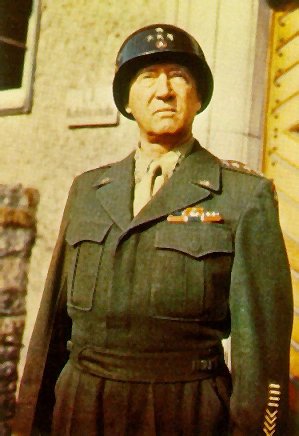
Wait a second. Last season, the front office couldn’t have crammed the fact that they built a team consisting of a solid group of veteran players with tremendous leadership abilities down our throats anymore than they did. So now they didn’t have enough leadership in the clubhouse? If the M’s would have had General Schwarzkopf and General Patton on the roster last year, they still would have sucked.


Delgado is regarded as one player on the market an offense can build around, broad shouldered and always upbeat, in addition to having a dream left-handed power stroke for Safeco Field.
Let me tell you, when rebuilding a team, it is critical that you sign as a 30+ year old first baseman with broad shoulders. This way, he is able to distribute the weight of the other 24 players he will be carrying on his back.


Beyond Delgado, there could be Brush Prairie's Richie Sexson, the pure power first baseman who is said to want very much to play back home in the Northwest.
The hang-ups in Sexson's situation are that he is coming off a shoulder injury that wiped out his 2004 season with Arizona, and he would be another right-handed bat in a lineup that leans that way to start.
Enough with the Pacific Northwest connections. Maybe, just maybe, a player with some form of connections to the Northwest may want to avoid Starbucks, grunge and flannel.


In addition to the need to upgrade the offense, Seattle's defense needs reworking after years as a given.
In this case, shortstop may come into play.
The Mariners must decide if Lopez is going to be their shortstop of the future, which is not a lock after he impressed more with his bat than his fielding last season.
"The kid (Lopez) is going to get a chance to play," Bavasi said. "But we're not necessarily saying that would be at short."
Agreed, the team needs to improve the defense and shortstop was one of the weaker defensive positions for the Mariners last year. Lopez is a logical choice as the successor at second, but there is a bigger question. Are there any shortstops currently in the M’s system that will be ML ready in 2006? No. This means the team will have to shop for a SS in 2006, when the available names aren’t as appealing as they are this season. It is possible that the team can somehow figure out a way to rid itself of Boone’s contract, plug Lopez in at second and acquire a SS this off-season. Plus, Bavasi’s quote sure as hell sounds like foreshadowing to me.


On the mound, Seattle could first try to bring back Derek Lowe. Questions about his maturity that led to his trade in 1997 seemingly still linger, but he answered any doubts about his ability to pitch in a big game Wednesday, winning Game 4 of the World Series for the Red Sox.
Other starters the Mariners might look at are Carl Pavano (18-8, 3.00 earned-run average with Florida); Jaret Wright (15.8, 3.28 ERA with Atlanta), who apparently is over health and maturity issues; or a number of others such as Matt Clement, Shawn Estes, Jon Lieber and Odalis Perez.
Here we go again with the Pacific Northwest connection. Let someone else give Derek Lowe a Dexter Jackson contract. Dave explains why to avoid Pavano. Jaret Wright, no thank you. Shawn Estes?!? Thanks, but no thanks. I’d rather try to brush my teeth with steel wool than pay a dime to Shawn Estes. Matt Clement is the best possibility out there and should be the M’s top free agent pitcher target. Personally, I like Odalis Perez. I know Jeff isn’t a big fan, but I think Perez will be a solid pitcher for the next three to four years.


In the bullpen, aging Troy Percival could give the M's setup or closer flexibility, as might Bob Wickman, Ugueth Urbina, Felix Rodriguez or, gulp, Armando Benitez, who had 47 saves with Florida last season. If the Mariners focus on lefties, Boston's Alan Embree, a Prairie High School graduate, will get some attention.
Felix Rodriguez had his option picked up by the Phillies. Alan Emree had a performance option he met this season, so he will be returning to the Red Sox. Benitez was one of the best NL relievers this past season and priced himself out of the Mariners price range. Troy Percival is also out of the Mariners price range. Wickman and Urbina would be cheap options, but shouldn’t be looked at until other needs are filled, similar to how the team signed Villone this year.


The Mariners' goal almost has to be a return to just being competitive next season, with a move toward contender status in 2006.
With that plan, they might add a piece or two this year — a big bat, a defensive upgrade or a reliever or two.
The goal should be for the Mariners to be competitive year in and year out, but some people in the front office dropped the ball on that this year and we will pay for it next season as well. With the amount of money this team takes in annually, there is no excuse for them not to be competitive every year. There is no reason why the M’s couldn’t add a big bat, a quality starting pitcher, a proven bullpen arm, and another bat or two this off-season. It will involve some creativity, but that’s what the suits in the front office get paid to do. And by creativity, I don’t mean on the ledger.


Then, depending on who develops, or does not, there might be more reworking next winter when Jamie Moyer's $8 million, Boone's $9.25 million and the $6 million Cirillo/Jarvis/Gonzalez headache come off the books.
Which will actually be about $7.5 million after taxes, construction fees to move the bricks that were covered by the temporary bleachers, construction costs to make the temporary bleachers permanent, a professional dance instructor for the grounds crew…


Of course, then there might be a debate how Seattle ownership would look at another potential year of the unthinkable and unpalatable — losing money.
Shut up.
If you could pick one player, regardless of price, that you want the M’s to sign this off-season, who would it be?

Who is the best free agent on the market this off-season?


The majority of you will have answered those questions with one name, Carlos Beltran. I did. Carlos Beltran is the cream of a relatively unspectacular free agent crop this off-season. Sure there are some big names available, but none of these names come without risk, some more significant than others. In any other year, Beltran would have been one of the better names available, but he wouldn’t have been placed as high on the pedestal as he has this year. Beltran is one of the more talented players in the game of baseball and is going to be paid like one.

There is no denying Beltran’s talent. He plays Gold Glove caliber defense at a premium position. He is the best offensive center fielder in baseball. He is one of the more efficient base stealers in the game. He made a seemingly easy transition from the AL to the NL, which bodes well for a team bringing him into a new environment. Everything that Beltran needed to do correctly this off-season, he delivered and Scott Boras couldn’t be happier.

As I mentioned the other day, Dayn Perry wrote a very interesting article on why he believes Carlos Beltran is an overvalued free agent. I tend to agree. I can’t recall any player in the past few years that helped themselves as much as Carlos Beltran did during the 2004 playoffs. His stats were absurd, collecting a .435/.536/1.022 stat line in 11 games with 8 home runs and a pair of highlight reel catches. His performance on the national stage is just going to give Boras further leverage in his contract negotiations. But as anyone who works with stats will tell you, sample size is everything.

Beltran is also going to draw interest from a handful of team teams who will most likely bid heavily for his services. The Chicago Cubs, Boston Red Sox, New York Yankees, Seattle Mariners and Houston Astros all figure to make offers. The Los Angeles Dodgers, Anaheim Angels and even San Diego Padres are possibilities depending on the direction they take this off-season. Like any auction, the more interested buyers, the higher the price. Dave seems to believe that the Mariners are going to make a very lucrative take-it-or-leave-it opening offer to Beltran, somewhere in the neighborhood of 6 years $95 million. The M’s obviously would be setting the market for Beltran, offering him a higher per season average salary than many analysts have speculated he would ultimately sign for (7 years $100 million). My guess is similar to Dave’s; Beltran will reject the offer and use it as the starting point for further negotiations, with the M’s and other clubs. Ultimately, I think Beltran will be wearing a Red Sox uniform, but who knows.

But back toward the main topic of the post, is Beltran overvalued? Last season, Vlad was the biggest name available on the market and was awarded a 5 year $70 million pact with the Angels, which was a freaking steal. So how does the top free agent from last years class match-up against the top two free agents from this year’s class, (remembering that Vlad spent a large chunk of time on the DL)?


Player

RC in ‘04

IsO in '04

EqA in '04

VORP in '04

Beltran

120.38

.280

.293 & .308

68.5*

Beltre

145.89

.294

.331

90.3


Player

RC in ‘03

IsO in '03

EqA in '03

VORP in '02 and '03**

Vlad

98.41

.256

.319

76.4 & 39.8


* The combined VORP from his time in Houston and KC.

**Vlad spent the a large portion of the 2003 season on the DL, so I included his 2002 VORP to help in the comparison.

Despite the glaring fact that M’s would have been smarter signing Vlad last season at what might be the best contract in baseball, you can see that both free agents had terrific seasons in 2004.

Both play solid, if not spectacular defense at their respective positions. Beltran had a rating (RAA2) of 2 in both KC and HOU and Beltre had a very impressive rating (RAA2) of 13, and neither has shown any signs of their defensive abilities regressing. In comparison, Vlad is slightly above average for his position. Beltran has the obvious edge defensively (but not by much), as center field defense is critical, especially for a ballpark such as SafeCo.

But there is something that strikes me as peculiar when looking at Beltran’s stats. He stunk at home, which is odd since he played in two of the better hitter’s parks in baseball. His .225/.316/.458 home stat line is similar top the numbers that Randy Winn put up at home last season, but with a little more power. Beltre was an equal opportunity masher, knocking the baseball out of one of the best pitchers parks in baseball and doing it on the road as well.

Of course, there is the whole money issue. Beltran is a terrific ballplayer, but is he really worth the largest contract since A-Rod? What about more than Vladimir? How much is a team willing to pay for a good offensive outfielder who happens to play Gold Glove defense in center? It’s too early to tell, but it will be a lot, a lot more than I think the M’s are willing to invest. Besides, Beltre figures to sign a contract somewhere in between Scott Rolen and Eric Chavez (6 years $70 million?), which would enable the team to pursue other free agents, both this season and down the line, without the financial restraints a deal with Beltran might pose (especially next season when Boone, Wilson, Moyer, Shiggy and Wiki Gonzalez will come off the books).

I have to admit, when I began writing this piece, I was sold that Beltran was the best possible player for this team, with Adrian Beltre close on his heels. But my opinion on the situation has changed a little and their roles have been flipped. I still think the club should offer Beltran a contract, but should he reject it, they should turn their full attention toward Beltre. Don’t get me wrong, I think that Beltran is an exceptional ball player. But for a team, who utilizes “fuzzy math” better than any team in baseball when computing their books, rolling the dice and hoping Beltran can continue his current production pace and/or improve, is going to be a costly investment.